About this edition
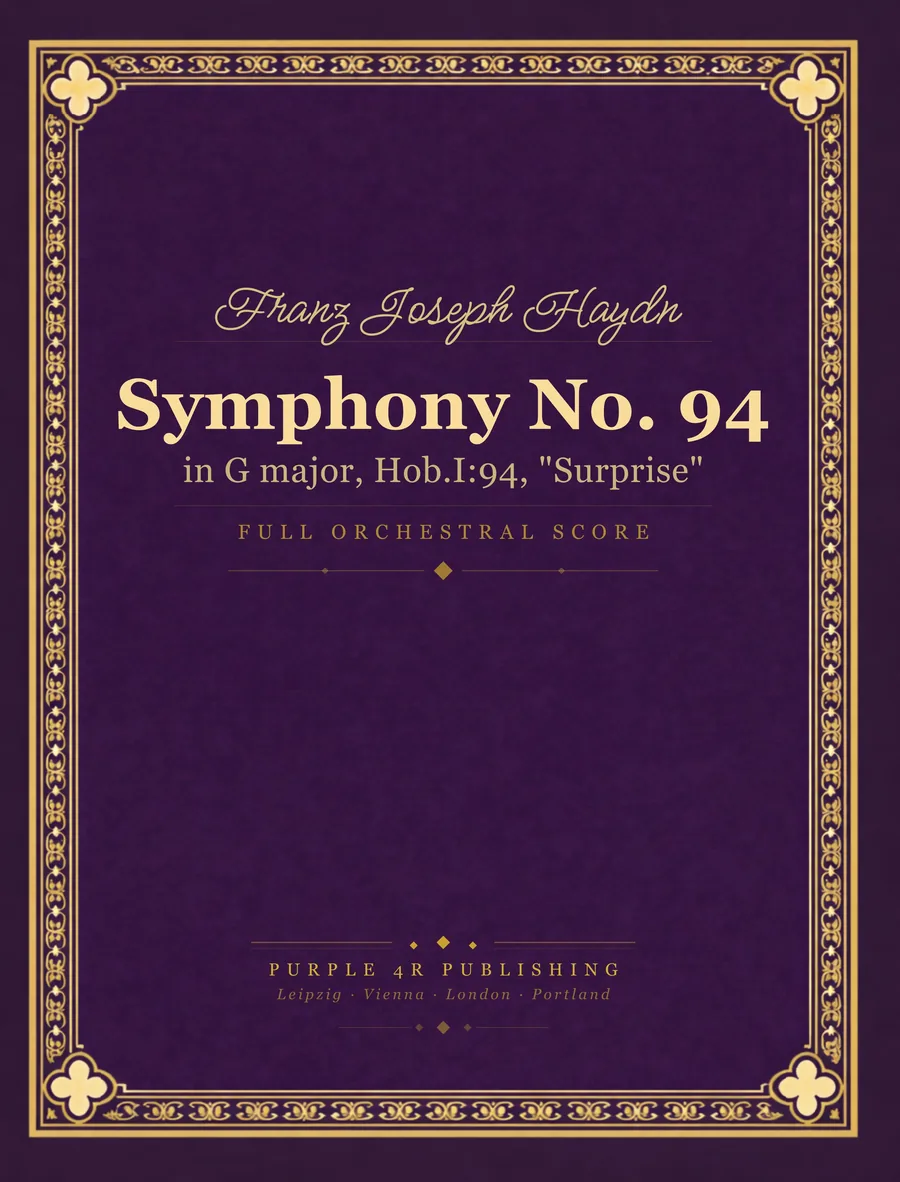
Composed in 1791 during Haydn's first triumphant London visit, Symphony No. 94 in G major earned its enduring nickname "Surprise" from the famously unexpected fortissimo chord that interrupts the gentle Andante of the second movement — a moment of wit that has delighted audiences for over two centuries. Beyond that single celebrated jolt, the symphony is a masterwork of mature Classical orchestration, with a buoyant opening Vivace assai, an elegant Menuetto, and a finale of irrepressible energy that showcases Haydn at the height of his symphonic invention.
This score reproduces the August Cranz edition (Leipzig, plate C. 45167, publisher's number 2403), part of Cranz's distinguished catalog of orchestral scores issued in the late nineteenth and early twentieth centuries. The Cranz firm, founded in Hamburg in 1814 and later expanded to Leipzig, was one of the most respected music publishers of its era, and their orchestral score editions were widely adopted by conservatories, conductors, and orchestras across Europe. The clean engraving and conventional layout of this edition make it especially well suited for study and reference.
About this edition:
- Full orchestral score (all parts in conductor's score format)
- Page size: 8.5 x 11 inches
- Reproduced from a public domain historical edition
- Source: Leipzig, August Cranz, No. 2403, plate C. 45167
- Composer: Franz Joseph Haydn (1732–1809)
- Catalog: Hob.I:94 — Symphony No. 94 in G major, "Surprise"
- Published by Purple 4R Publishing
This edition is a faithful reproduction of a historical score that has entered the public domain, making one of Haydn's most beloved London symphonies readily available to conductors, orchestral players, students, and scholars. We're delighted to help keep this cornerstone of the Classical repertoire on music stands and study desks where it belongs.