About this edition
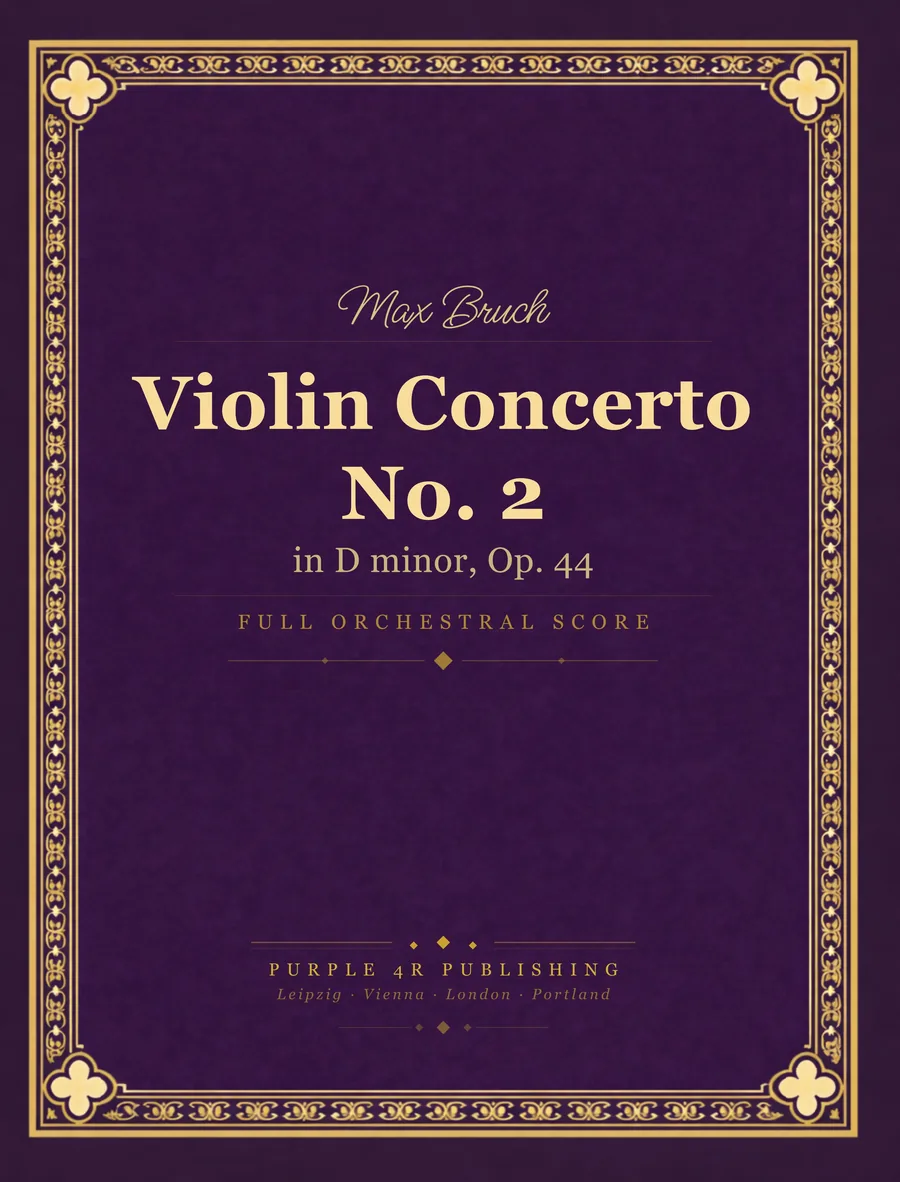
Composed in 1877 and dedicated to the great virtuoso Pablo de Sarasate, Bruch's Violin Concerto No. 2 in D minor, Op. 44 stands as the composer's ambitious answer to the shadow cast by his own beloved First Concerto. Cast in an unusual three-movement structure that opens with a brooding Adagio ma non troppo rather than a conventional fast movement, the work unfolds with dark lyricism, dramatic recitative-like passages for the soloist, and a fiery finale that draws on the Spanish flavor Bruch associated with its dedicatee. Long overshadowed by the G minor Concerto, it rewards performers and listeners with some of the composer's most impassioned melodic writing.
This edition faithfully reproduces the original full score published by N. Simrock in Leipzig in 1878 (plate number 8013), issued shortly after the concerto's premiere by Sarasate in London. Simrock was among the most distinguished German music publishers of the nineteenth century — Brahms's principal publisher and a firm that maintained close working relationships with the leading composers of the day. As an early authorized printing prepared while Bruch himself was actively supervising his publications, this Simrock edition carries significant historical weight and remains a valuable primary source for performers and scholars examining the composer's intentions.
About this edition:
- Full orchestral score (conductor's score), not a study miniature
- Generous 8.5 x 11 inch page size for excellent readability at the podium
- Carefully reproduced from a public domain historical source
- Clean, sturdy binding suitable for rehearsal and study use
- Published by Purple 4R Publishing
This volume brings a historic printing of Bruch's Second Concerto back within easy reach of today's conductors, violinists, and students. We're delighted to help make this cornerstone of the late-Romantic violin repertoire — drawn from a public domain source — available once again to the musicians and scholars who love it.