About this edition
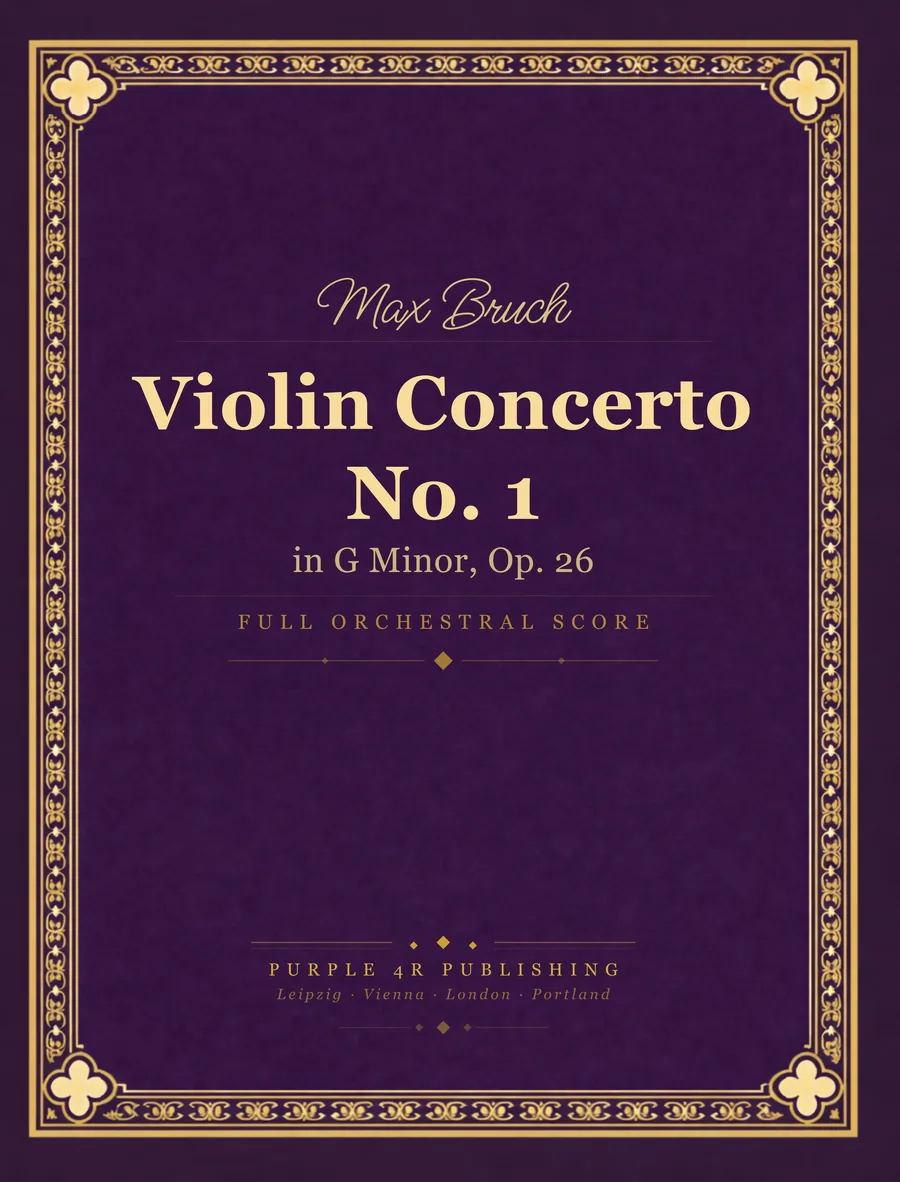
Max Bruch's Violin Concerto No. 1 in G Minor, Op. 26 stands as one of the most beloved works in the entire violin repertoire, a Romantic masterpiece whose lyrical Adagio and blazing Finale have made it a cornerstone of the concert stage since its 1868 premiere in its revised form by Joseph Joachim. What sets this concerto apart is its remarkable structural innovation — the opening "Vorspiel" functions as an extended preludial fantasy rather than a traditional sonata movement — combined with a melodic generosity and idiomatic writing for the solo violin that Bruch developed in close consultation with Joachim himself.
This edition reproduces the full orchestral score published by C.F.W. Siegel of Leipzig (plate number 5801, ca. 1879), one of the earliest full-score printings of the work following its widespread success. Siegel was Bruch's principal publisher for many of his works during this period, and their editions were prepared with the composer's direct involvement, making them a foundational source for the performance tradition of the concerto. The clarity of the Leipzig engraving and the authority of the Siegel imprint have kept this score in reference by conductors and scholars for well over a century.
About this edition:
- Full orchestral score (conductor's score with all parts in system)
- Page size: 8.5 x 11 inches, printed for clarity and desk use
- Faithfully reproduced from the original C.F.W. Siegel first edition, Leipzig, ca. 1879 (plate 5801)
- Reproduced from a public domain historical source
- Published by Purple 4R Publishing
This score is a faithful reproduction of a historical edition that has entered the public domain, making one of the great treasures of the Romantic concerto repertoire readily available to violinists, conductors, students, and scholars. We hope it serves you well in study, rehearsal, and performance.