About this edition
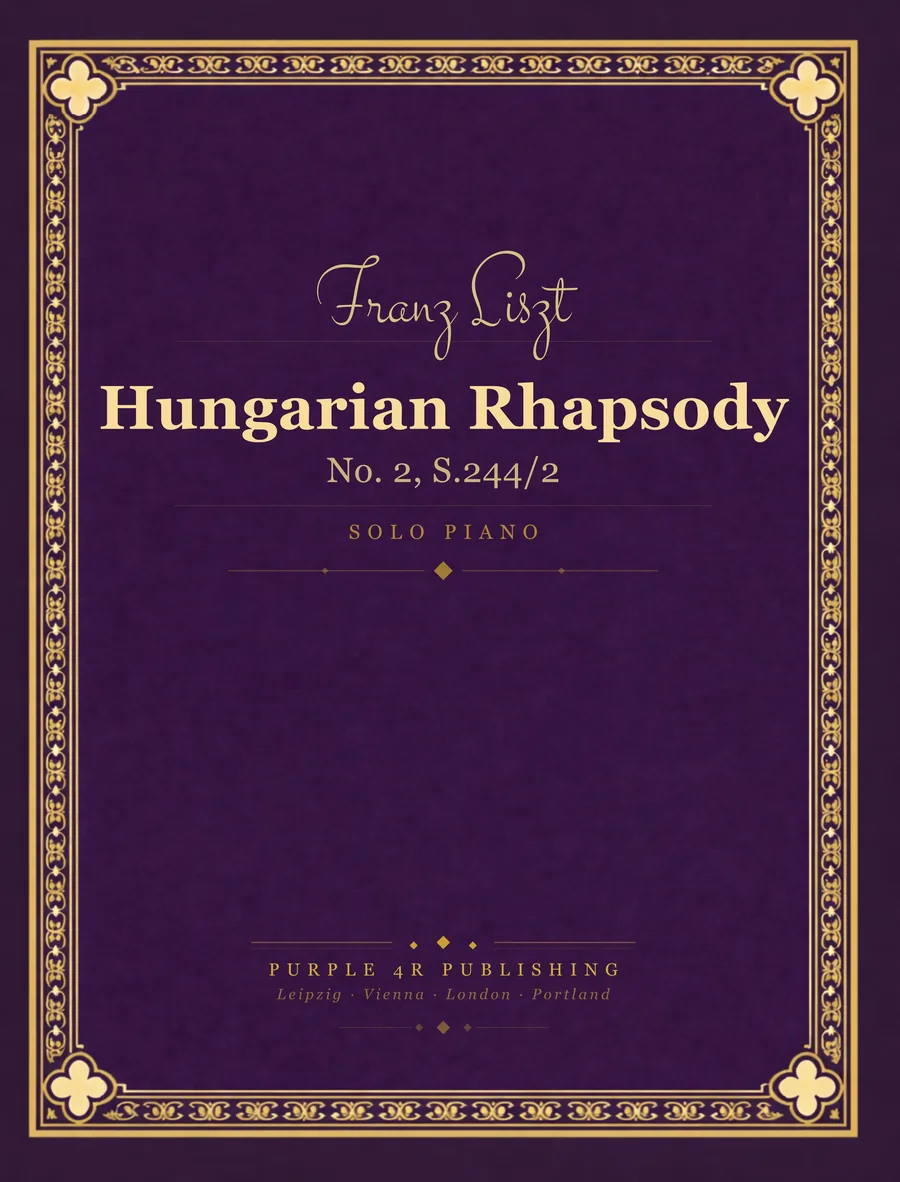
Franz Liszt's Hungarian Rhapsody No. 2 in C-sharp minor, S.244/2, stands as perhaps the most iconic of the nineteenth century's virtuoso showpieces — a work whose dramatic lassan and exhilarating friska have captivated audiences since its publication in 1851. Drawing on Hungarian-Romani musical idioms and the verbunkos tradition, Liszt fused improvisatory freedom with formal architecture, creating a rhapsody that has become equally beloved in its original piano form, in orchestral garb, and through countless arrangements and cultural appearances.
This edition reproduces the Mills–Liszt Series No. 1, published in New York by Prochazka in 1884 and edited by the English-American pianist Sebastian Bach Mills (1838–1898), who also contributed the cadenza. Mills, a respected concert pianist of his day and a longtime fixture of New York musical life as soloist with the Philharmonic Society, brought firsthand performance insight to his editorial work. His Liszt Series for Prochazka represents an important late-nineteenth-century American engagement with Liszt's repertoire, and his cadenza offers a window into the performance practice of the era — a valuable historical document for performers and scholars studying the reception and transmission of Liszt's music in the decades following the composer's lifetime.
About this edition:
- Format: Full score
- Page size: 8.5 x 11 inches
- Source: Reproduced from a public domain historical edition
- Original edition: Mills–Liszt Series No. 1, Prochazka, New York, 1884
- Editor: Sebastian Bach Mills (1838–1898), including cadenza
- Publisher: Purple 4R Publishing
This volume is a faithful reprint of a public domain historical score, carefully prepared so that this enduring masterpiece remains accessible to today's performers, students, and scholars. We hope it serves you well in study, rehearsal, and performance.